
In construction, we pay a great deal of attention to the performance of materials, their cost, and how easy they are to install — but far less to where they come from, as if that aspect had little impact on a project’s overall quality. Yet behind every material used on a job site lies a very concrete reality: manufacturing, transportation, a supply chain, and decisions that directly influence the building’s environmental footprint.
It is with this in mind that Isobloc has always chosen to design and manufacture locally, right here in Québec, in step with the realities of the industry and today’s challenges. Building in Canada involves very specific constraints — climate, codes, building durability — and a product designed abroad can’t always meet those requirements with the same precision.
Producing locally therefore goes beyond a simple marketing argument: it ensures a better fit between the product and its context of use, while maintaining rigorous control over manufacturing quality and consistency. This direct link between design, production, and on-site use is often what makes the difference between a product that works on paper and one that truly fits into a project.
Il y a aussi un élément qu’on oublie souvent, mais qui prend de plus en plus d’importance : le transport.
An imported material sometimes travels thousands of kilometres before reaching a job site, which means not only delays and logistical risks, but also higher greenhouse-gas emissions that aren’t always visible in the first analyses.
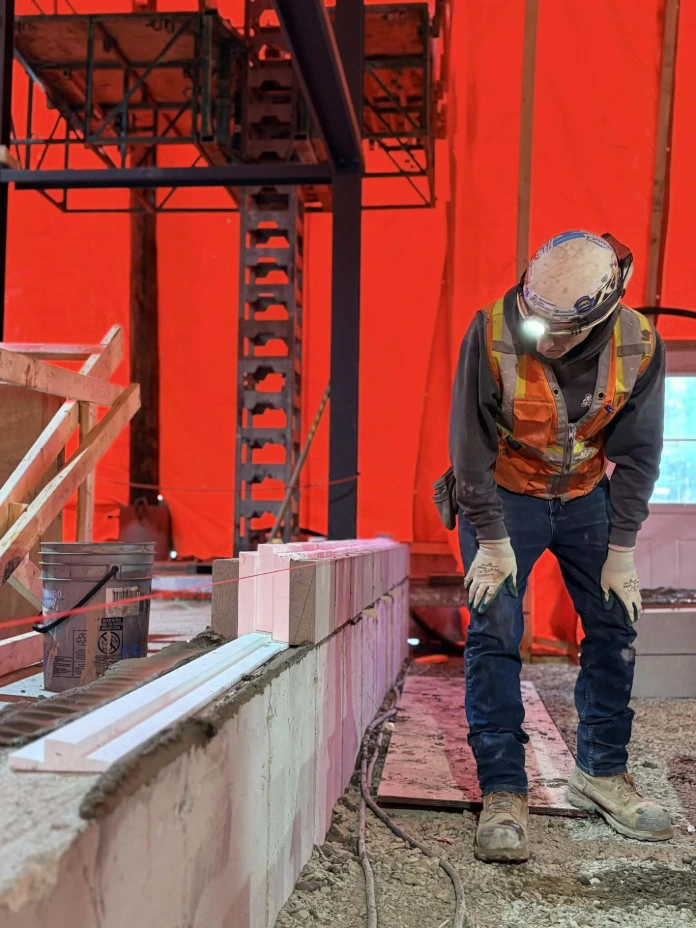
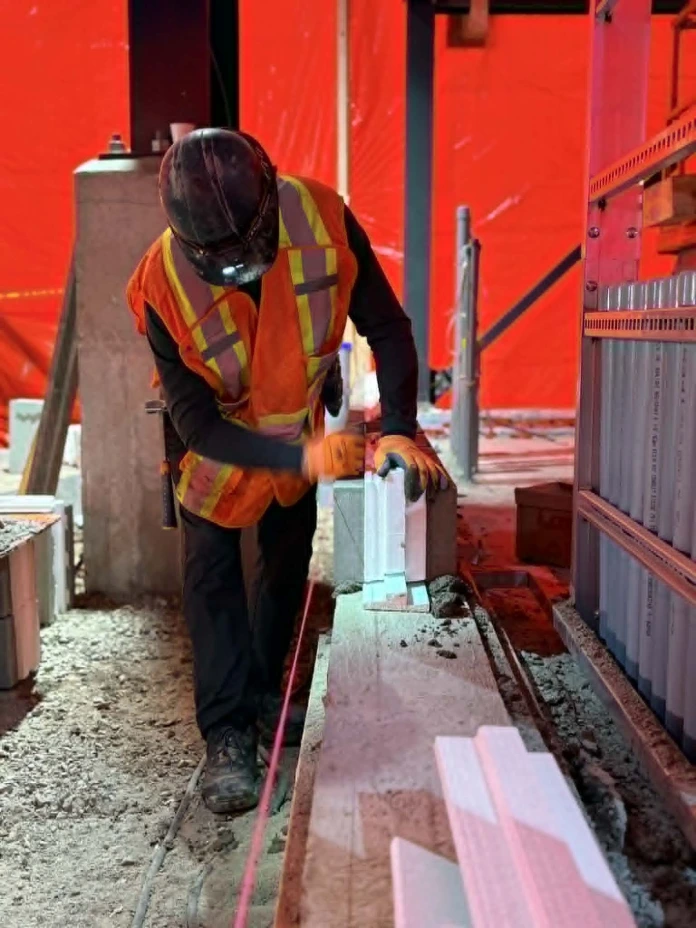
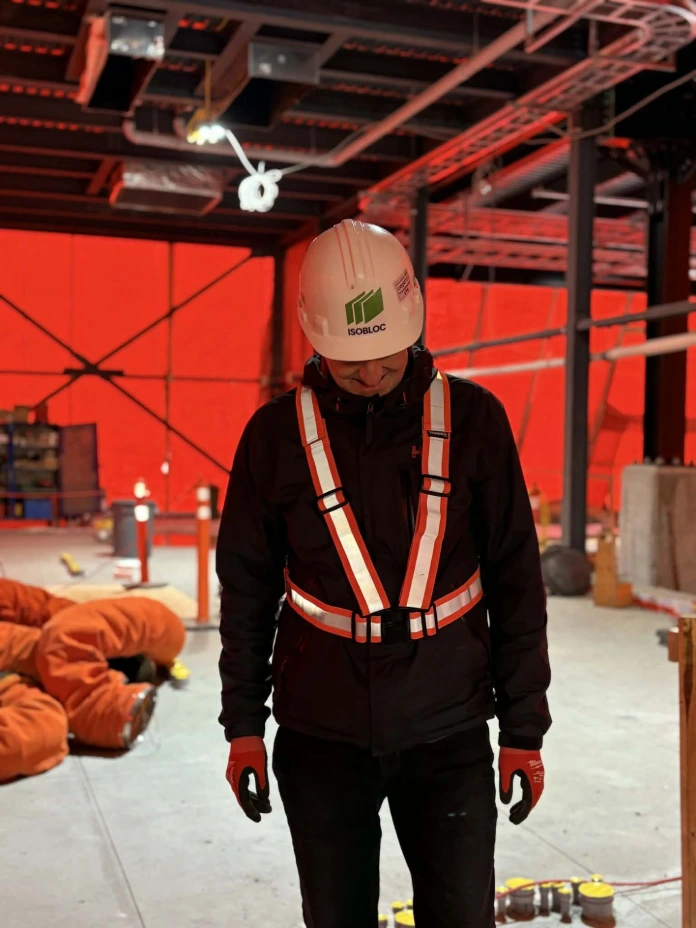
By producing locally, Isobloc considerably reduces this invisible portion of the carbon footprint, while simplifying the supply chain and limiting dependence on external, often unstable markets. Beyond manufacturing and transportation, durability remains central. A durable material isn’t simply one that performs in the short term, but one that keeps its properties over time, without requiring major maintenance or frequent replacement — which has a direct impact on the resources used over the long term. From this standpoint, Isobloc takes a consistent approach in which durability rests not on a single element, but on the entire system, from initial design to the building’s service life.
This logic continues today with Isobloc ZÉRO, which pushes the thinking even further by building a significant reduction of carbon emissions right into manufacturing, while valorizing residual materials and capturing CO₂ during the process. It’s no longer just about producing locally, but about rethinking how a material can help, from its very design, to reduce a project’s environmental impact.
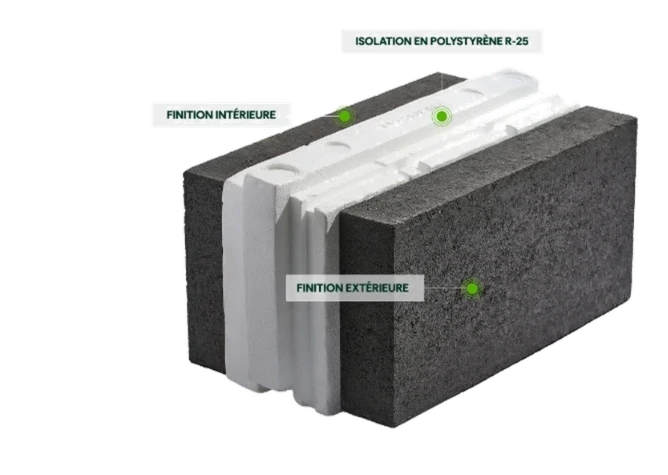
In the end, choosing a material is never a trivial act, even if it can look like one. It’s a decision that influences not only the building’s performance, but also its overall impact, from manufacturing to service life. And sometimes, the most logical solution isn’t the most complex one.
It simply comes down to favouring products designed and made here, for projects that also take place here.
So why do without it?